Derek Price


In this clip from our Addicted To Life Community Gathering, Rob Rowsell lays out the Cash On Cash Return Real Estate Formula. If you are an aspiring cash flow investor who is looking to replace your business income with recurring passive earnings, then this video is a must watch!

Satisfied Businessman Stacking his Cash On Cash ReturnRob Explains His Cash On Cash Return Real Estate Formula

Rob starts the clip out with a review of two real estate deals he is raising money for. Both of them would qualify as momentum plays. Over time, each investment will yield an average of  7% cash on cash return. Through renovations and rent increases, these properties’ values will increase.

When he sells these properties, Rob uses a formula to calculate total returns. The back end equity earned, plus the cashflow from the five to seven year ownership will equal the total.

Rob then explained the principle of the 2X multiple, which is his goal typically with real estate holdings. In order to reach his stated goal of doubling his money, Rob may need to hold the investments longer than he had originally planned.

For example, let’s say you had invested $100,000 in a property, kept it for six years, and earned back $140,000. Then you would divide $140,000 by six in order to arrive at around $23,000 profit per year. You will have roughly gotten a 23% return on your initial $100,000 investment after six years. That cash on cash return may sound too good to be true. However, in reality, it’s not!

Join Our Community

Do you own multi-family properties? If not, do you aspire to one day? Then you should consider joining our online discussion group, the Addicted To Life Community! Each month, Rob Rowsell will teach you what you must do in order to build wealth in the real estate business. It’s not as easy as it looks! Property taxes, liens, and legal fees can all be hard to navigate, so having a successful guide in your corner like Rob is a must! Enroll today!
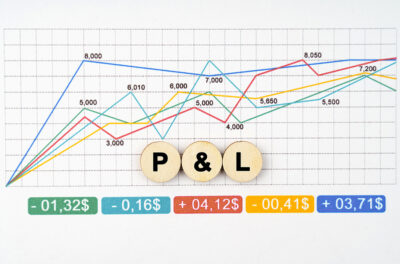

Rob explains how to calculate the financial freedom amount you need to live comfortably each month. This could mean in retirement or in an emergency financial event. Also, we discuss the process of reviewing how much you need for your security fund, and auditing your investments.

Calculate financial freedom amount with your personal P&L - Profit and Loss Report for financial independenceFinancial Freedom Amount – Finding it through your Profit and Loss Review

Rob starts out reviewing three levels of living standards: the basic level, vitality level, and your financial freedom amount. To determine how much you need to live on day to day, you must perform a personal P&L review with your own bookkeeping software. Whether it’s Quickbooks or another platform, it should have tools built in to generate profit and loss statements easily.

He then presents the concept of “grateful business expenses”. If he didn’t own a business, he couldn’t write off certain expenses, such as his cell phone bill and medical expenses. Make sure those write offs are part of your report!

Next, the discussion turns to your security fund. Your financial freedom amount must take into account money you’ll need in case of disaster. Rob recalls the day that the COVID-19 pandemic shut down all non-essential businesses. Many people were not prepared for this scenario, and we are still feeling the effects of it today. You must determine your own emergency fund number by months of income. Rob’s wife Claudia’s comfort lies with 18 months of income in the bank.

After that, you need to examine your investment funds. Are you stacking cash you don’t want to touch, but can afford to if need be? In an absolute emergency, you can borrow from your kids’ education fund, albeit with penalties.

Take all of these factors in when calculating your financial freedom amount.

Join Our Community

Do you own multi-family properties? If not, do you aspire to one day? Then you should consider joining our online discussion group, the Addicted To Life Community! Each month, Rob Rowsell will teach you what you must do in order to build wealth in the real estate business. It’s not as easy as it looks! Property taxes, liens, and legal fees can all be hard to navigate, so having a successful guide in your corner like Rob is a must! Enroll today!

video
play-sharp-fill

The Anatomy of a Multifamily Deal

Key Topics:

  • 2 Types of ” Reg D Syndication
  • “Buy Box” Criteria
  • “Fly-by” Acquisition – Deal Flow
  • After the close of Escrow
  • Time for sale disposition
  • Buy & Hold